Continuing with exile, writing, language, fight for freedom and human rights, it’s not sufficient to mention what an Eastern European poet like Paul Celan has in common with African writing; for instance, Jack Mapanje. The consolation we find in language, however “foreign,” the haunting quality and the brokenness that language and rhythm carry to convey […]

About MKB
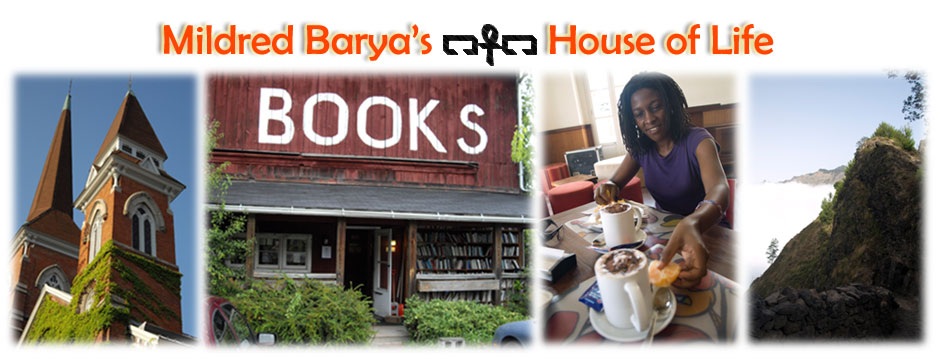
Mildred Kiconco Barya is a North Carolina-based writer, educator, and poet of East African descent. She teaches and lectures globally, and is the author of four full-length poetry collections, most recently "The Animals of My Earth School" released by Terrapin Books, 2023. Her prose, hybrids, and poems have appeared in Shenandoah, Joyland, The Cincinnati Review, Tin House, New England Review, and elsewhere. She’s now working on a collection of creative nonfiction, and her essay, “Being Here in This Body”, won the 2020 Linda Flowers Literary Award and was published in the North Carolina Literary Review. She serves on the boards of African Writers Trust, Story Parlor, and coordinates the Poetrio Reading events at Malaprop’s Independent Bookstore/Café. She blogs here: www.mildredbarya.com
Paul Celan on my mind
Paul Celan has been on my mind, particularly his most known poem, Death Fugue. The Romanian poet and translator wrote in German, but lived and died in Paris. I came to know his writings when I took a class on Eastern European writers, and never looked back because I found a lot in common with […]
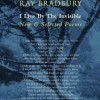
Ray Bradbury Electric
The death of Ray is a hard one to take. I discovered him in our little library when I was a child, in a small village of Kabale, and started writing letters to him but never sent them because they were in my head. For me that was the beginning of liking fantasy as a […]
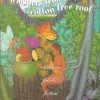
The world of Angela Carter and Nalo Hopkinson
I think one of the pleasures of great literature is to come to the end of a story and realize that you’ve read it before, but something magical, fantastical, or darker and absurd has been added to it. That’s the joyous feeling I get when I read Angela Carter and Nalo Hopkinson. I recognize their […]
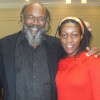
Graduation April
I’ve been silent this April, trying to wrap up the semester nicely, my last in Syracuse. We’ve had an active weekend of graduation full of emotion. Unbelievable almost that the three-year program is over. Was only yesterday when we began. Now again time to pack the bags and explore new territories, new opportunities, new futures… […]
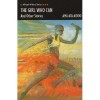
The Girl Who Can…
I’d forgotten how beautiful this story is by Ama Ata Aidoo. Told simply and boldly. I remember reading Ama’s other story: She Who Would Be King—another great one–and admiring her vision for women’s top leadership positions. That was before any country in post-colonial Africa had a female president. A few years down the road, (in […]
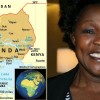
Kony 2012 is just what we needed to spin us into action
With all the questions and buzz around me about Kony 2012, I can’t help but add my say. And am going to offend some people, I know, but can’t help it. This is one of those moments when I can claim my Ugandaness in full–as if it is contested! Just to show my perspective. And […]
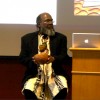
The word is “self curate or die”
The title, “Self curate or die,” is a quote from the main character in Dana Spiotta‘s novel: Stone Arabia. A wonderful book that I’ll feature in detail some time. Just happy to meditate on that particular quote which my prof. and pal, Arthur Flowers, has embraced on his webpage. I’m so thrilled to see him […]
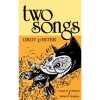
Celebrating Okot p’Bitek and the poets of the 60’s
Okot p’Bitek might be the most remembered and known Ugandan poet, born June 7, 1931 – July 20, 1982. His most popular books: Song of Lawino (1969), Song of Ocol (1970), and Two Songs: Song of a Prisoner, Song of Malaya (1971) enjoyed a cherished position for years on Uganda’s syllabus for high school and college. […]

In the spirit of sharing
A review in today’s Monitor For my readers in Ug the book is available at Aristoc Booklex. All my love.
-
MKB: Thank you so much! I would love to read yours too ...
-
Brenda C Wilson: Congratulations! I hope to get a chance to read yo...
-
Kwasi opoku: Why did Nana usually say that Adjoa did not know t...
-
-



Follow @midibarya on Twitter